

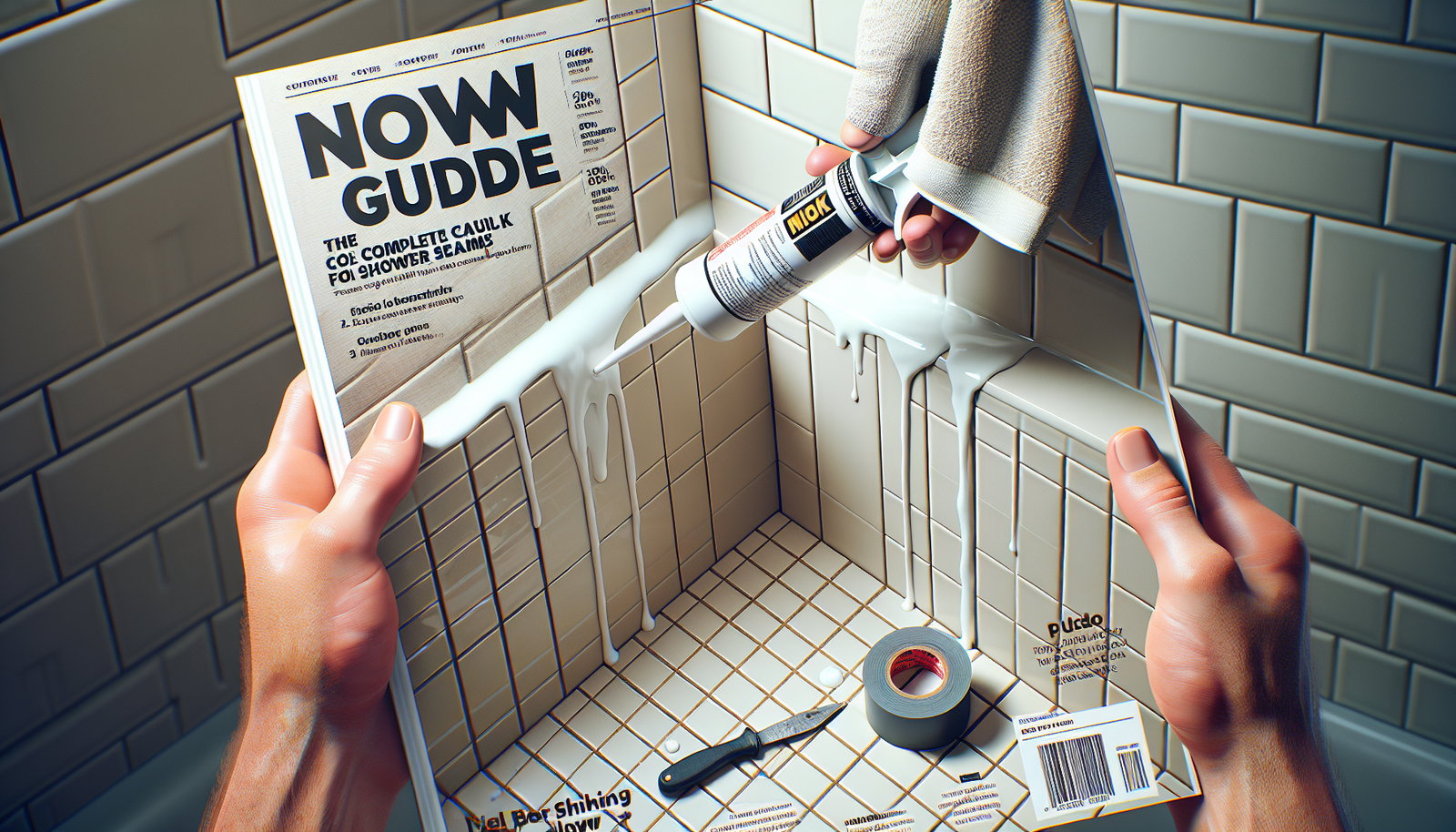
Properly applying caulk for shower seams keeps your bathroom dry, hygienic, and free from costly water damage that can lead to rot, mold growth, and structural issues over time. This comprehensive guide walks through every detail from selecting the ideal caulk type to advanced maintenance strategies, ensuring you achieve professional-grade results that last for years. Whether you’re dealing with an aging shower in a busy family home or sealing a newly renovated space, mastering these techniques delivers a flexible, watertight barrier that handles daily moisture exposure and subtle building movements without cracking or peeling.
Table of Contents
Why Caulk for Shower Seams is Essential
Caulk for shower seams serves as the critical frontline defense against water infiltration that sneaks behind tiles, around tub edges, and into wall cavities where it causes hidden devastation. Without a proper seal, moisture penetrates framing, subflooring, and insulation, leading to wood rot, drywall delamination, and even electrical hazards in severe cases that often go unnoticed until repairs cost thousands. High-quality caulk creates an impenetrable barrier that flexes with natural settling while blocking the damp micro-environments where black mold spores thrive, protecting both your home’s integrity and family health from respiratory irritants and allergens.
Failure modes reveal themselves gradually but escalate quickly: adhesion loss occurs when surfaces aren’t prepped correctly or caulk ages beyond its lifespan, allowing water to wick underneath and create bubbles or separation. Cracking plagues rigid materials in high-flex zones like floor-wall transitions, while mold invades as antimicrobial additives degrade, turning once-pristine seams into breeding grounds. Gaps form from substrate shifts, demanding flexible formulations that bridge without crumbling—pure grout fails spectacularly here, exacerbating leaks into adjacent rooms. Neglect compounds into persistent odors, stained ceilings below, warped baseboards, and crumbling grout lines that signal deeper structural compromise.
Routine vigilance catches problems early. Inspect caulk for shower seams every 3-5 years or immediately upon noticing:
- Cracked, shrunken, or missing beads that no longer fill joints completely.
- Discoloration, softness when pressed, or tacky residue indicating water saturation.
- Water stains, bubbling paint, or efflorescence on walls/ceilings outside the shower enclosure.
- Musty odors persisting despite cleaning, hinting at cavity moisture.
Reserve caulk for shower seams strictly for dynamic movement joints—corners where walls meet, tub-to-tile perimeters, door jambs, and fixture bases that expand/contract with temperature fluctuations. Grout suits static, planar tile-to-tile connections but shatters under flex stress, creating pathways for invasion. Combine with daily habits like squeegeeing glass and floors, exhaust fan use for 30 minutes post-shower, and silica gel packs in corners to minimize humidity buildup. These practices extend seal longevity dramatically while preventing the cascade of repairs from minor oversight.
Real-world examples abound: homeowners ignoring tub flange gaps watch water migrate under vinyl liners, buckling floors months later. Corner seams without silicone develop hairline fractures after seasonal heaving, channeling drips into studs. Proactive sealing averts these scenarios, saving thousands in mold remediation alone—which averages $500-6000 depending on spread.
Choosing the Right Caulk for Shower Seams
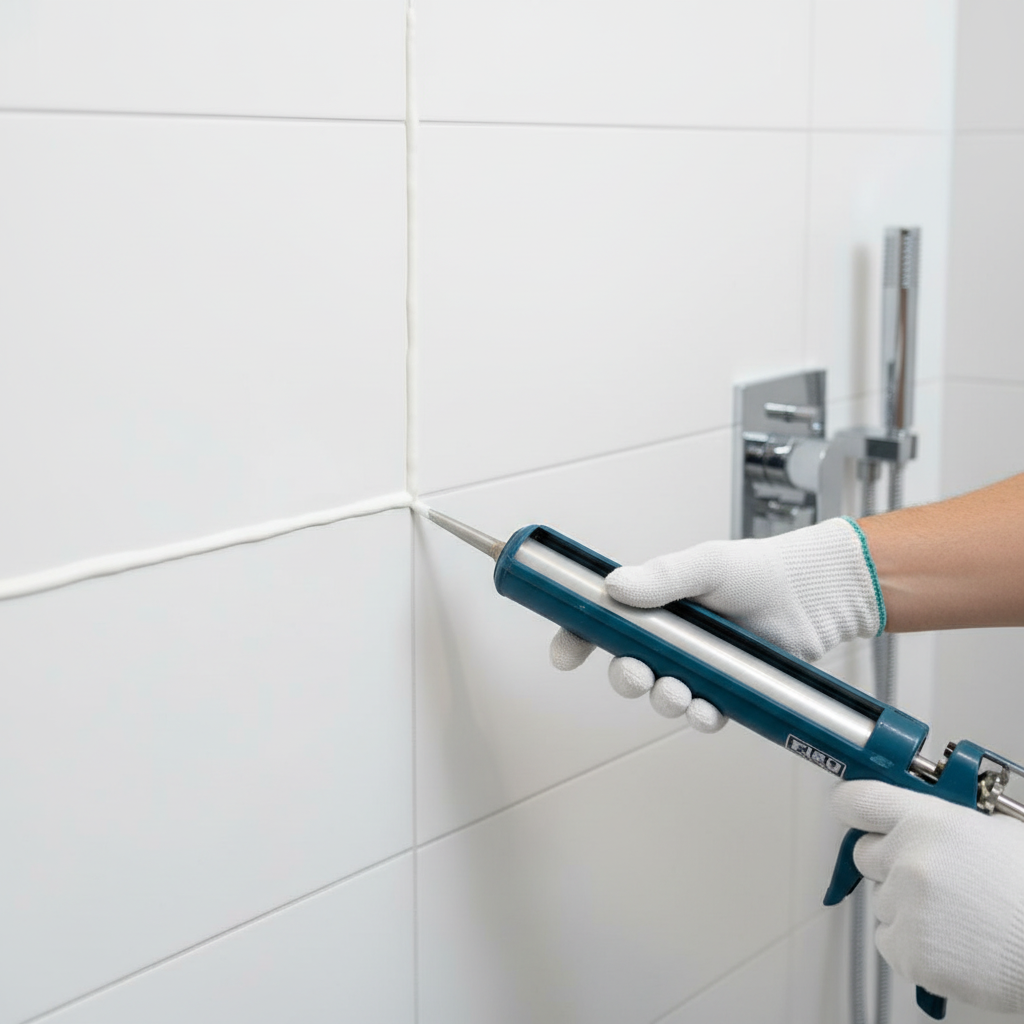
Among all options, 100% silicone emerges as the undisputed champion for caulk for shower seams, delivering laboratory-grade waterproofing, elastomeric flexibility exceeding 500% elongation, and integrated mildewcides that inhibit fungal growth for a decade. Top performers like Gorilla Waterproof Silicone Sealant bond tenaciously to glossy porcelain, frosted glass, cultured marble, and fiberglass composites common in showers, curing tack-free in 30 minutes with full strength in 24 hours. Low-odor, low-VOC variants minimize ventilation needs, ideal for occupied homes, though gloves remain essential to avoid skin sensitization. These formulations resist yellowing, cracking, and hydrolysis even under constant submersion.
Siliconeized acrylic hybrids merge paintability and grout-like color matching with moderate silicone enhancement for splash zones, smoothing effortlessly for seamless integration. However, their 25-50% lower flexibility limits use to vertical seams with minimal movement—avoid submerged ledges or floors where pure silicone’s superior hydrostatic resistance shines. Premixed grout caulks mimic tile grout texture perfectly for aesthetic repairs but sacrifice durability in wettest exposures, prone to efflorescence and softening over 2-3 years. Polyurethane sealants offer industrial adhesion for dissimilar materials like metal-to-stone but cure slower (up to 7 days) and demand primers on porous surfaces; mildew protection varies. Advanced silyl-terminated polymers (hybrids) balance speed and strength but cost 2x silicone.
Strategic selection by application prevents premature failure:
- High-movement corners, tub flanges, and curbs: Exclusively 100% silicone for 25+ year lifespan.
- Color-critical vertical tile edges beyond direct spray: Siliconeized acrylic or grout caulk, refreshed biennially.
- Glass block/block window perimeters or frameless doors: Silicone’s glass-specific primers ensure gapless seals.
- Mixed substrates (kerdi-board to tile): Hybrid sealants with primer recommendations.
Scrutinize product data sheets beyond labels: verify “shower/tub rated,” minimum joint width (typically 1/8-1/2 inch), service temperature (-20°F to 180°F), and tensile strength (>200 psi). Purchase 10.1 oz cartridges for single showers (covers 30-50 linear feet at 1/4-inch bead); bulk contractor tubes suit multiples. Reject expired stock—shelf life 12-18 months—as separation yields poor beads. Temperature matters: apply above 40°F, cure below 90% humidity. For deeper insights, consult Bob Vila’s caulk testing. Complement with our kitchen storage solutions for coordinated bathroom upgrades.
Test compatibility: extrude samples onto scrap materials, cure 48 hours, then flex and submerge to confirm performance. Color selection impacts longevity—whites yellow slower than clears under UV exposure through windows.
Preparing the Shower for Caulking
Thorough assessment precedes action: illuminate seams with LED work lights to expose microcracks, separations >1/16-inch, embedded debris, or subsurface efflorescence signaling alkali leaching. Mark failures with painter’s tape flags, prioritizing corners (80% failure rate) and submerged ledges. Partial removals doom new applications—commit to complete excision for monolithic bonds.
Deploy chemical warfare first: caulk remover gel penetrates silicone in 1-2 hours, softening for peel-away without gouging. Follow with 5-in-1 scrapers at 15-degree angles, oscillating tools for depths >1/4-inch, or carbide blades for cured acrylics. Protect adjacent grout with micro-fiber barriers; vacuum incrementally to trace progress. Safety gear mandatory: nitrile gloves (silicone solvents degrade latex), splash goggles, N95 masks for dust/mildew.
Residue eradication demands specifics: alkaline degreasers dissolve acrylic/latex, 91% isopropyl alcohol evaporates silicone oils, bleach (1:10) eradicates mold roots—dwell 15 minutes, neutralize with baking soda rinse. Final wipe-down with tack cloths captures particulates; verify dryness via moisture meter (<12% reading) or overnight air-drying with box fans/dehumidifier. Dampness traps vapor beneath new caulk, nucleating bubbles in weeks. Painter’s tape at precisely 3/16-inch offset yields 1/8-inch beads; burnish edges vapor-tight. Nozzle geometry critical: 45-degree bevel, orifice 1.5x gap width prevents voids.
Comprehensive toolkit ensures precision:
- Dripless smooth-rod caulking gun for drip-free control.
- 7-piece finishing tool set for concave profiles.
- Denatured alcohol, soapy lube, microfiber detailing cloths.
- Flexible putty knives, 5-gallon shop vac with crevice tool.
Post-prep incubation: 8-24 hours minimum, monitoring RH below 60%. Common pitfalls—rushing onto damp substrates (failure rate 70%), tape too distant (wavy beads), or residue films (delamination)—undermine even premium caulk for shower seams. Reference Home Depot’s sealant prep protocols for pro standards.
Advanced technique: prime glossy porcelain with silane adhesion promoter for 30% stronger bonds in high-shear zones.
How to Caulk a Shower Step by Step
Precision nozzle prep sets success: measure maximum gap, cut orifice 80% that dimension at 45° bevel using utility shears—avoids stringing. Load cartridge stem-first into caulking gun, puncture inner seal, purge air via test bead on cardboard. Calibrate trigger pressure for steady 1/16-inch diameter flow without blobs or starvation.
Commence at ceiling height, gravity-assisting fill. Maintain 2-3 inch/second travel speed, nozzle 1/4-inch above surface, perpendicular to joint axis—adjust for bevels. Inside corners demand twisted nozzle insertion; outside fillets require back-beveling. Interruptions? Cut bead cleanly, resume overlapping 1/2-inch. Wider gaps (>3/8-inch) require backer rod insertion first for optimal depth-to-width ratio (2:1).
Tooling transforms amateur blobs into pro contours: within 2 minutes, wet-finger soapy lube (1:10 dish soap/water) or finishing tools depress bead 30% into gap, feathering edges razor-thin while compressing air pockets. Concave radius (1/16-inch) maximizes surface tension resistance. Extract tape parallel to surface at 45° during skinning (10-30 minutes)—perpendicular tears edges. Alcohol-damp cloths excise smears instantly; mineral spirits for cured silicone.
Cure chronology: tack-free 20-90 minutes, light use 12 hours, full immersion 48-72 hours (verify label, adjust for 50% RH/70°F baseline). Deeper beads (>1/2-inch) demand 7-day avoidance; cooler temps double times. Ventilation protocol: exhaust fan + cracked window clears VOCs, preventing headaches in windowless baths. Troubleshooting live: sags? Wipe/tool immediately; skips? Overbead and retool; drips? Gun rod retraction technique.
Execution checklist verifies perfection:
- Uniform concave beads filling 100% joint volume, no fishmouths/voids.
- Feather-edge transitions invisible from 3 feet.
- Zero tooling ridges, spills, or embedded contaminants.
- Ongoing airflow until odor dissipation (24-48 hours).
Practice iterations on plywood mockups build muscle memory for first-time flawlessness in caulk for shower seams. Ventilation breaks every 20 minutes in confined spaces mitigate fumes; respirator optional for volume work.
Maintenance, Troubleshooting, and When to Re-Caulk
Vigilant monitoring sustains performance: monthly visual scans under magnification detect hairline fissures before propagation; quarterly tactile probes reveal subsurface softening from hydrolysis. Water bead tests—trace seams post-dry, observe absorption timing (>5 minutes ideal)—flag permeability early. Odor profiling distinguishes surface mildew from cavity rot.
Surface interventions suffice initially: 10% bleach or commercial mildewcides scrub cosmetic growth without abrasion; hydrogen peroxide variants non-chlorinating for grout adjacency. Persistent penetration or >10% seam compromise mandates excision—spot patches delaminate adjacent material. Peeling signals prep failures or incompatible substrates; scrape to sound epoxy, repaste aggressively. Shrinkage/cracking from UV/ozone exposure or thermal cycling responds to full refresh every 3 years silicone, annually acrylics.
Preventive regimens amplify durability:
- Mechanical water shedding via daily silicone squeegee (glass/floors) removes standing droplets that erode seals over time.
- Post-shower purge: 45-minute fan cycles drop RH below 50%, preventing condensation pools in corners.
- pH-neutral cleaners weekly; prohibit ammonia/acetone eroding silicone matrix—use vinegar solutions instead.
- Corner silica desiccants absorb condensate micro-pools during humid months.
- Monthly bleach wipes (1:10 dilution) kill surface mildew without degrading bond strength.
- Avoid abrasive scrubbers that gouge beads, creating crack initiation sites.
Re-caulk thresholds: replace if 20%+ compromised, water tests fail, or mold recurs post-cleaning. Patch viable for isolated 6-inch segments with firm anchors; extended runs demand totality. DIY suits accessible standard tubs; pros essential for frameless glass (>8 feet), tile-to-solid surface compounds, or rot suspicions (hygrometer probes, infrared thermography). Labor quotes $250-800 single shower; materials $50 max. Document interventions for warranty claims.
Escalation indicators—wallboard softness, buckling vinyl, joist staining—demand plumbers for leak sourcing before resealing. Insurance covers mold if sudden/substantial; maintenance neglect voids claims.
Affiliate Disclosure: This post contains affiliate links. Purchases support Simply Make Home at no extra cost to you.