

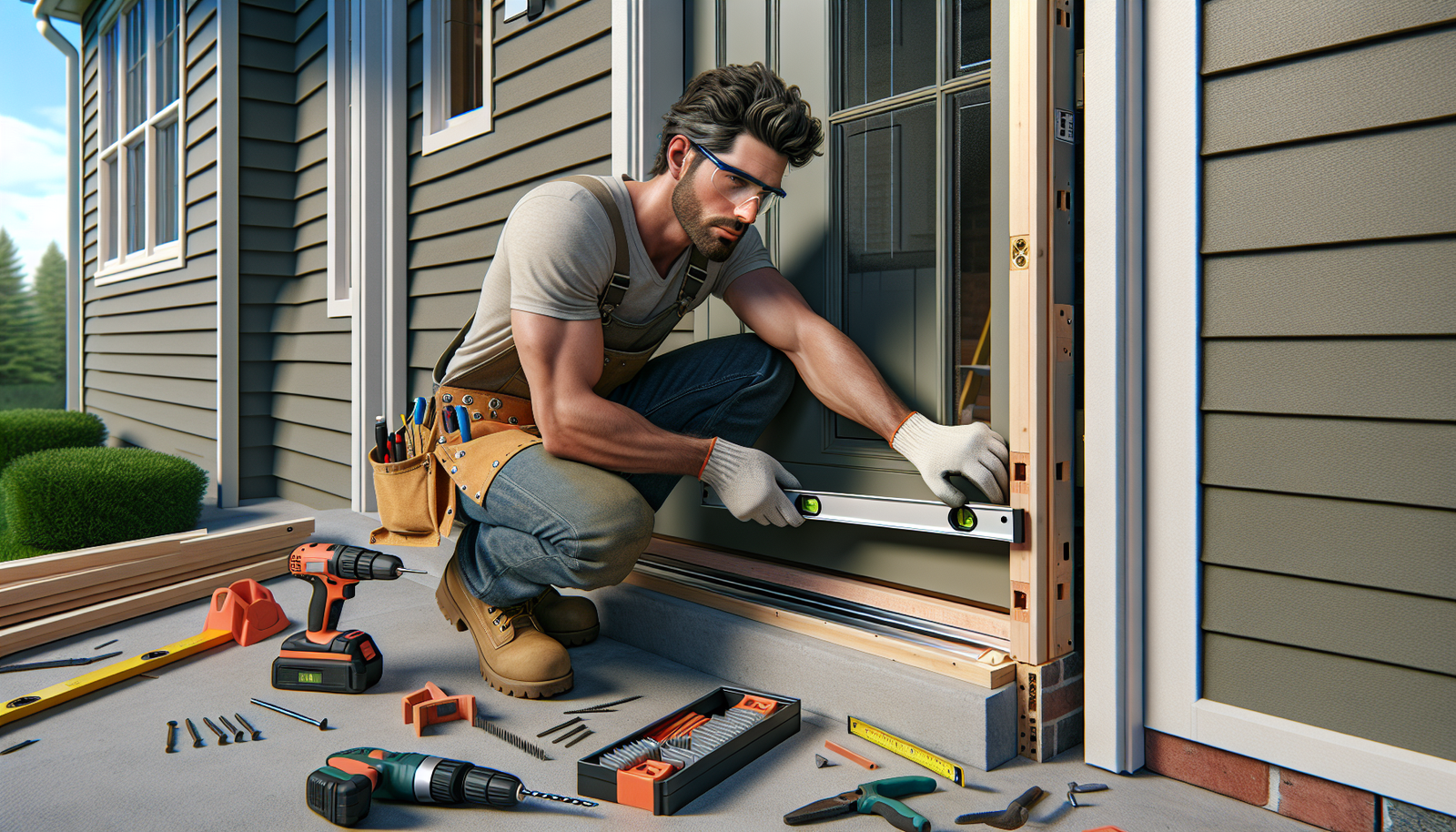
Replace a door frame to enhance your home’s security, energy efficiency, and curb appeal. This guide details 7 essential steps for interior or exterior doors. Follow these instructions to avoid common pitfalls and achieve professional results.
Table of Contents
Assess Damage Before You Replace a Door Frame
Start by inspecting the current frame closely. Look for wood rot at the sill, jambs, or threshold, which signals the need to replace a door frame completely. Persistent gaps between the frame and wall often mean misalignment from settling or moisture damage.
Water stains or mold around the frame indicate intrusion issues. Check if the frame is square by measuring diagonals—they should match within 1/4 inch. Warped or split wood compromises security and weatherproofing.
Termite damage or pest tunnels require full replacement to prevent spread. Difficulty latching or locking the door points to structural failure. Document everything with photos for reference or professional consultation.
Retrofit vs Full Replace a Door Frame
Choose retrofit for minor issues where the rough opening stays intact. This method inserts a prehung unit without wall demolition, preserving trim and siding. It’s faster at 2-4 hours and costs $120-$400 in materials.
Full-frame replacement suits rot, water damage, or exterior doors. Expose the rough opening to rebuild sill, jambs, threshold, and flashing properly. Expect 4-8 hours and up to $800, including repairs. Always verify if your wall is load-bearing.
Measure rough opening width, height, and depth precisely. Inspect header and king studs for issues. Check threshold level and subfloor condition. For exterior doors, prioritize flashing integration from the start.
Prehung units simplify the process to replace a door frame with built-in weatherstripping. Custom jambs work for odd sizes or historic homes but demand more skill. Allow 1/2-3/4 inch for shimming on all sides.
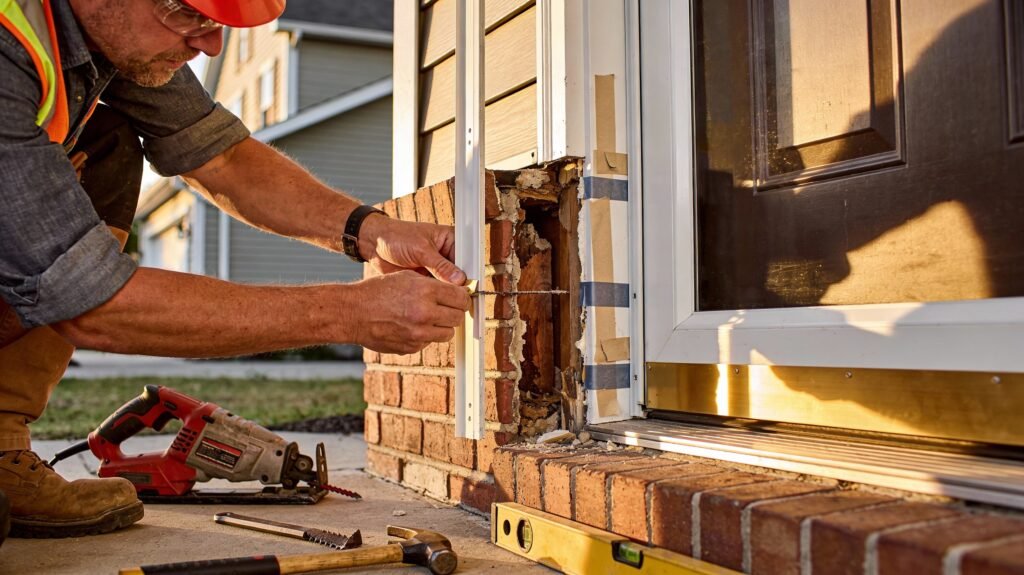
Essential Tools to Replace a Door Frame
Gather tools before starting to replace a door frame efficiently. A cordless reciprocating saw cuts nails and jambs quickly during demo. Use a pry bar to remove casings without wall damage.
Add a hammer for nails and shims, plus a circular saw with fine-tooth blade for straight cuts. An impact driver secures screws into framing. Keep a 4-foot level for plumb and square checks.
Framing square ensures accurate corners. Composite shim kit adjusts the new frame precisely. Chalk line marks alignments, while a caulk gun seals edges. Utility knife scores paint lines safely.
Key Materials for Secure Installation
Stock up on self-adhesive flashing tape 4-6 inch for waterproofing sill and jambs. Use peel-and-stick sill pan to shield subfloor from water. Exterior-grade polyurethane caulk fills seams durably.
Low-expansion foam seals gaps without bowing jambs. Corrosion-resistant 3-inch screws anchor to studs. Stainless threshold fasteners resist rot. Add weatherstripping and adjustable sweep for tight seals.
Secure hinges with two 3-inch screws per location into framing. Strike side gets long screws above and below the plate. Trim uses 1.5-2 inch finish nails only—not for structure. Follow manufacturer spacing for thresholds.
Safety Gear When You Replace a Door Frame
Prioritize protection to replace a door frame safely. Safety glasses shield eyes from debris during cuts. Dust mask or respirator handles lead paint dust from pre-1978 homes—test first if unsure.
Gloves prevent splinters and cuts. Knee pads and sturdy boots protect during kneeling and tool drops. For load-bearing walls, use temporary jack posts before demo.
Cover floors with ram board or drop cloths. Seal adjacent siding to block water. Shut off power near wires and use a circuit tester. Shield glass to avoid shattering. Check local codes for permits on exterior work.
Step 1: Remove Old Frame Carefully
Score paint lines with utility knife to avoid tearing. Pry off interior trim and label pieces for reuse. Remove door by pulling hinge pins. Detach hardware like strike plates and threshold fasteners.
For full removal, pry casings gently. Cut nails with reciprocating saw through jamb-to-stud connections. Remove jambs starting from latch side, then head and hinge side. Lift out threshold last. Clean nail stubs from opening.
Inspect for rot or pests. Sister damaged studs or replace subfloor if soft. Treat mold with fungicide. Upgrade house wrap ties. Support load-bearing headers with jack posts—call a pro if unsure.
Step 2: Prep Rough Opening Perfectly
Vacuum dust and remove fasteners. Level studs and header; plane if out of square. Measure diagonals for squareness. Mark shim and anchor points. Level subfloor or use compound.
Avoid making blind cuts near electrical cables. Install the threshold flashing first (required for exterior doors). Measure the opening in three different places to get the smallest dimensions. Note the wall thickness for a perfect fit of the frame. If you experience drafts during the replacement, consult our guides on other DIY techniques.
Step 3: Dry Fit New Frame
Unpack and inspect prehung unit for defects. Measure against opening specs. Scribe jambs if uneven. Dry fit with even 1/8-inch reveals using coins as spacers. Adjust as needed.
Step 4: Install Flashing and Sill Pan
Fit sill pan with back-dam for drainage. Lace 6-inch flashing tape up sides, overlapping house wrap. This step prevents 90% of water failures when you replace a door frame. See Green Building Advisor flashing guide for detailed techniques
Step 5: Shim and Secure Frame
Insert frame plumb. Shim behind hinges first, then strike and head. Drive 3-inch screws through hinges into studs. Check square, plumb, level repeatedly. Fill gaps with low-expansion foam sparingly.
Step 6: Add Hardware and Test
Install lockset, deadbolt, hinges. Test door swing and latch. Adjust threshold for seal without binding. Reapply flashing tape shingle-style over flange. Seal with caulk.
Step 7: Finish Trim and Weatherproof
Prime cut ends of trim. Install interior/exterior casing with cope joints at corners. Caulk gaps paintably. Add head flashing and bulb weatherstripping. Paint or stain for protection.
Troubleshooting After Install
Door binds? Loosen hinges, adjust shims. Uneven reveals mean reshim. Leaks? Check flashing laps. Sagging? Add 3-inch hinge screws. For persistent issues like drafts, revisit weatherstripping.
Annual Maintenance Tips
Recaulk joints yearly. Inspect flashing and trim for cracks. Tighten fasteners. Lubricate hardware. Replace worn sweeps. These habits extend frame life by years.
Cost and Time Recap
DIY to replace a door frame saves $800+ vs pros. Retrofit: 2-4 hours, $200-400. Full: 4-8+ hours, $400-800. Factor permits and tools. Proper execution ensures decades of reliability.
Disclosure: This post contains affiliate links. Purchases made through these links may earn commission at no extra cost to you. Thanks for supporting Simply Make Home!