

Table of Contents
This article explores practical bathroom wall tile ideas, bathroom wall paint ideas, and recommended Sherwin‑Williams products to withstand moisture while creating a cohesive look.
You’ll learn material choices, layout and installation essentials, paint and finish recommendations, color pairing strategies, and maintenance tips to ensure a stylish, durable bathroom transformation based on practical bathroom wall tile ideas.
Choosing the Right Bathroom Wall Tile Ideas for Your Space
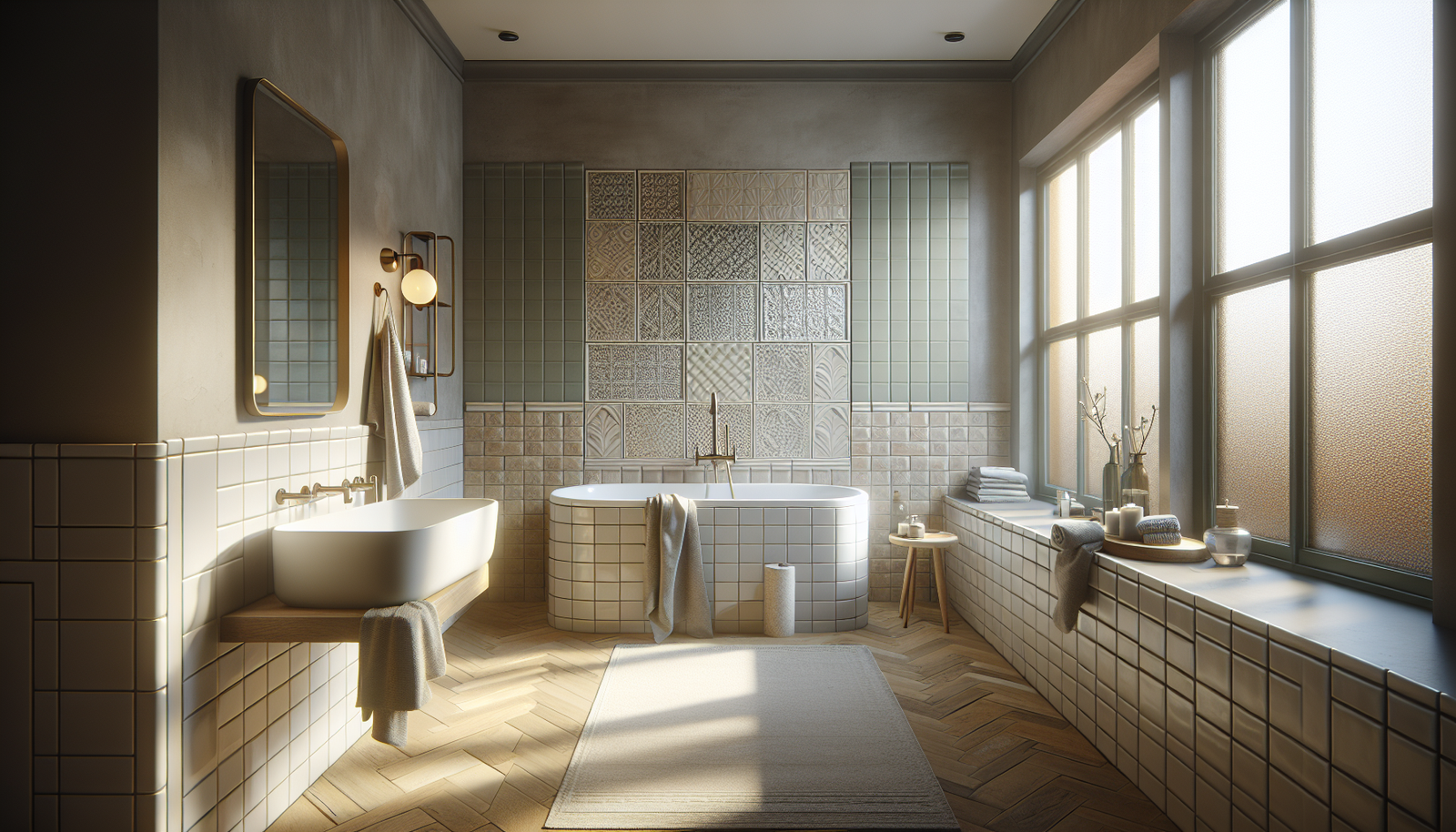
Bathroom wall tile variety sets the stage for both durability and style in your space. Porcelain tiles are top contenders, highly resilient to water and staining, ideal for wet zones, and offer extensive designs. Ceramic tiles, generally more budget-friendly, are easier to cut and install—great for DIYers—though slightly less tough than porcelain. Natural stone tiles like marble, travertine, or slate add authentic, luxurious texture but need regular sealing to resist moisture. Glass tiles reflect light beautifully and create shimmer effects, especially in accent zones, but can be trickier to install and pricier. Mosaics—whether ceramic, porcelain, or stone—bring impactful detail for shower niches or borders, but require more grout, raising maintenance effort.
Tile size and format significantly affect perception:
Large-format tiles (think 12×24” or bigger) create a seamless, low-grout look that can make small bathrooms seem larger.
Classic subway tiles (3×6” or similar) are timeless and versatile, working with nearly every bathroom wall paint idea and Sherwin-Williams paint palette.
Hexagon and shaped tiles introduce visual interest and retro-modern appeal.
Mosaic tiles suit feature walls or wet niches, drawing the eye with pattern and color.
Finish choices further tweak the result:
Glossy tiles amplify brightness but reveal water spots.
Matte tiles subtly diffuse light and disguise smudges.
Textured or slip-resistant finishes work best within showers or safety zones.
Cost ranges: ceramics and standard porcelain start affordable while natural stone and intricate mosaics push costs higher. Porcelain’s lifecycle justifies investment in high-traffic bathrooms. For 2024–2025, trends include terrazzo-look porcelain, wood-look tiles, oversized formats, and bold encaustic patterns—easy to coordinate with any Sherwin-Williams palette.
Strategically use full wall tile coverage in shower zones or entire small bathrooms for water defense. Half walls or accent stripes highlight fixtures or pair beautifully with classic bathroom wall paint ideas.
Tip 1: Match durability to area—use dense, low-absorption tiles in wet zones.
Tip 2: Factor tile size for fewer grout lines in compact spaces.
Tip 3: Consider maintenance—glossy and textured tiles differ in cleaning needs.
Tip 4: Coordinate tile undertones with your chosen Sherwin-Williams paint.
Tip 5: Test samples in your lighting before committing.
Tip 6: Evaluate cost versus lifespan, especially in high-use bathrooms.
These bathroom wall tile ideas help you balance material, size, and finish so your walls stay beautiful and easy to maintain.
These bathroom wall tile ideas work for small powder rooms and busy family bathrooms, so you can adjust materials and patterns to your real-life needs.
With the right wall tile picked, installation essentials—like prepping your substrate and waterproofing—become the next focus for lasting results.
Bathroom Wall Tile Ideas for Layout and Waterproofing
Substrate preparation
Always start with a solid, flat substrate for your bathroom wall tile. Cement backer board is the gold standard for wet areas—resistant to moisture, it’s ideal behind showers or tub walls. Greenboard (moisture-resistant drywall) is only suitable for low-splash dry wall areas; avoid using it in direct wet zones as it can deteriorate over time.
Remove dust and debris. Use backer board screws, spaced per manufacturer specs, and tape seams with alkali-resistant mesh for a stable foundation.
Waterproofing membranes
Apply a waterproofing membrane (like a liquid-applied or sheet system) directly over cement backer board for shower enclosures, bath walls, or any wet wall.
Extend membranes to corners, niches, and anywhere splashes reach. This step is critical to prevent mold and costly water damage.
Mortar and grout choices
Use modified thinset mortar for tile installation—it offers superior adhesion for porcelain, ceramic, and even heavier stone tiles.
Cement grout is economical and easy to apply, but needs sealing, especially with light colors or natural stone. Epoxy grout is more stain- and water-resistant, perfect for showers or busy baths, but demands swift, careful application.
Layout planning
Map layout lines; center tiles on the main wall or use a feature tile to anchor your design. Minimize slivers and uneven cuts near ceilings or fixtures.
When you plan layout lines for your bathroom wall tile ideas, think about where your eyes land first—usually the main wall you see when you enter the room.
Keep cut tile edges tucked at floor level or behind vanities for a polished look.
Incorporate movement joints around perimeters and fixtures to absorb expansion and prevent cracks.
Tile to 42″–48″ for wainscoting or half walls. For full-height, cap just below the ceiling for a contemporary vibe.
Plan smooth transitions to the floor and coordinate wall tile heights for adjacent paint finishes or accent bands using inspiring bathroom wall paint ideas from Sherwin-Williams palettes.
Installation checklist
Prep substrate and waterproof per zone
Snap layout lines and dry-lay tiles
Mix and apply thinset, set tile
Cut tiles for edges and fixtures
Grout joints, clean haze, seal if needed
Expert or DIY?
Hiring a pro ensures plumb lines and precise transitions, especially for intricate patterns. DIYers should allow 2–5 days for a small bath wall, depending on complexity and drying times.
Common mistakes to avoid
Improper substrate or skipping waterproofing leads to long-term failure.
Neglecting movement joints risks tile cracks. Picking the wrong grout or poor cleaning can stain or haze high-contrast tiles.
Maintenance tips
Epoxy grout simplifies cleaning, resists mold, and is ideal for high-use showers; while cement grout, when sealed, works well for walls outside splash zones but may need routine resealing.
Solid installation choices now will make future pairing with Sherwin-Williams bathroom paints far easier and longer-lasting.
Bathroom Wall Tile Ideas with Sherwin-Williams Paint
Sherwin-Williams offers several high-performance bathroom wall paint ideas that stand up to humid, moisture-prone spaces. For optimal results, focus on their advanced Interior Acrylic Latex lines. Sherwin-Williams offers several high-performance bathroom wall paint ideas that complement your bathroom wall tile ideas and stand up to humid, moisture-prone spaces.
Emerald Interior Acrylic Latex is engineered for superior mildew resistance and excellent washability. The built-in antimicrobial agents actively inhibit mold growth—a must for bathrooms with limited ventilation. Its smooth, self-leveling finish maximizes color clarity.
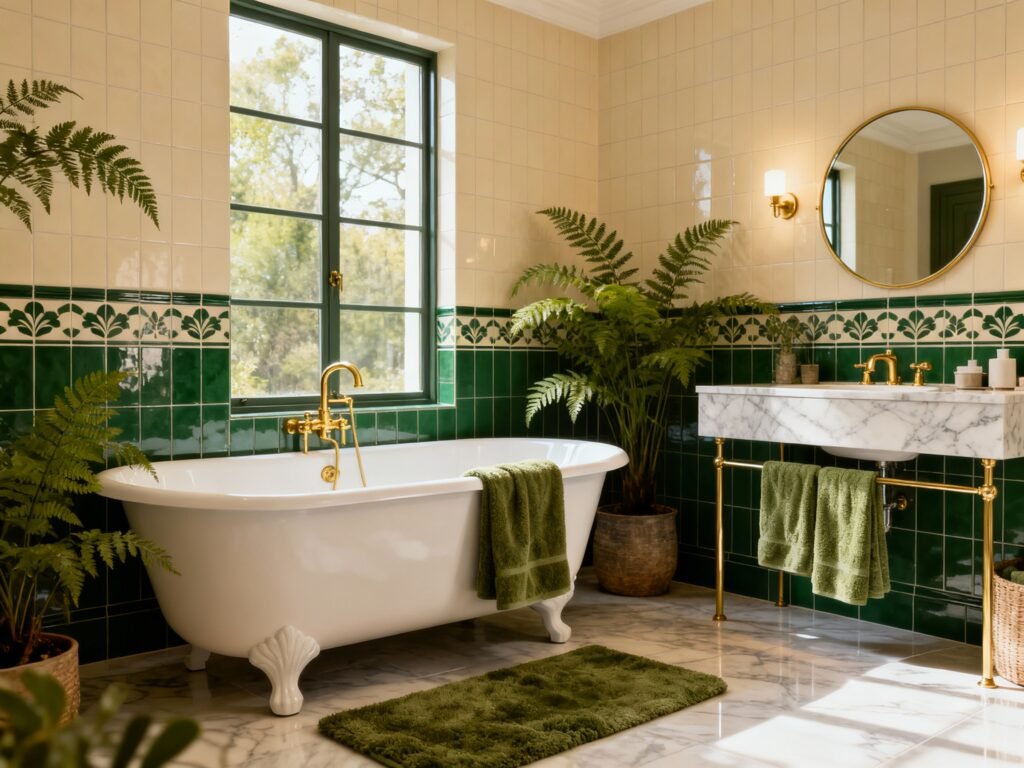
Duration Home Interior Acrylic Latex is a powerhouse for bathrooms, providing exceptional durability, stain resistance, and moisture protection in high-traffic spaces. Its advanced washability makes it ideal where repeated cleaning is necessary.
SuperPaint Interior Acrylic Latex delivers impressive coverage and strong adhesion—good for updating previously painted surfaces or pairing with new tile installations. Its balanced formula also offers reliable mildew resistance and value.
Satin or semi-gloss finishes are best for bathroom walls exposed to frequent splashes and steam, as they enhance washability and resist water penetration.
Eggshell finish is suitable only for low-moisture, well-ventilated bathrooms and powder rooms. Gloss finish should be reserved for trims, casings, and cabinetry to highlight details and ensure thorough stain resistance.
Proper surface prep is crucial: apply Sherwin-Williams Multi-Purpose Primer or Extreme Bond Primer over raw drywall, patched areas, old glossy painted walls, or surfaces adjacent to new tile. This step ensures uniform adhesion and lasting durability, especially where previous finishes may interfere with new paint.
Recommended Sherwin-Williams color picks for a range of bathroom wall paint ideas include:
Sea Salt SW 6204 – a tranquil spa green, perfect for a fresh, calming retreat.
Repose Gray SW 7015 – a versatile, neutral-warm gray that pairs well with marble or white tile.
Alabaster SW 7008 – a creamy, soft white for timeless brightness.
Accessible Beige SW 7036 – a warm beige for cozy, understated style.
For depth: Iron Ore SW 7069 or Naval SW 6244 excel as accent hues for cabinetry, vanities, or trim.
Apply two coats for full coverage—allow a minimum of two hours between coats, and ensure windows or fans promote adequate ventilation. Opt for low-VOC or zero-VOC formulas when available, prioritizing indoor air quality. These Sherwin-Williams options and techniques provide an adaptable palette, paving the way to expertly combine paint and tile in the next step of your bathroom design.
For extra inspiration, you can explore more bathroom paint color ideas directly from Sherwin-Williams.
Harmonizing Tile and Paint for a Cohesive Bathroom Design
Coordinating bathroom wall tile and paint is the key to a unified, elegant bathroom—every decision impacts the finished effect. Start by considering color pairing strategies: choose tiles and Sherwin-Williams paints with compatible undertones. For instance, if your tile has warm ivory or beige tones, select a paint like Accessible Beige SW 7036, avoiding cool blues or grays. When working with crisp white subway tile, Repose Gray SW 7015 or Sea Salt SW 6204 both offer gentle contrast while maintaining cohesion. These bathroom wall tile ideas become even stronger when you repeat similar undertones in your paint so nothing feels random or disconnected.
Use the 60-30-10 rule: Make your largest element (often tile) 60%, your paint 30%, and accents—like accessories or a painted feature wall—10% for balance. In a small bath: white marble-look porcelain tile (60%), painted walls in Alabaster SW 7008 (30%), and navy vanity (Inkwell SW 6992, 10%).
Warm vs cool: Match tile and paint temperature. Cool gray tiles suit gray-blues like Misty SW 6232, while warm travertines love soft creams or taupes.
Grout color matters: Contrasting grout (e.g., charcoal with white subway tile) emphasizes patterns—pair with a subtle neutral paint like Repose Gray SW 7015. Matching grout is quieter, allowing bolder wall color, like Sea Salt SW 6204 above white or marble tile.
Tile patterns and paint: Busy patterned or mosaic tile? Stick to calm, muted paint—think Origami White SW 7636. With plain large-format tiles, add personality with an accent wall—try Rainwashed SW 6211 for spa vibes.
Half-tiled walls: Extend tile partway and paint above, using a hue that repeats in the tile’s veins or flecks—test swatches of Sherwin-Williams colors on-site, observing them morning and evening. Lighting dramatically shifts perception; use sample boards and review colors under bright, dim, and natural light.
Dos and don’ts
Do align tile and paint undertones.
Do use sample boards and multiple test swatches.
Do consider grout as a color element.
Don’t overwhelm small bathrooms with intense color pairings on both tile and paint.
Don’t skip checking how paint and tile look at night versus sunlight.
Case scenarios
Small bath: White subway tile, dark grout, Repose Gray SW 7015 paint above tile, bright, open feel.
Medium bath: Patterned encaustic tile to chair-rail height, soft White Duck SW 7010 above tile for tranquility.
Large bath: Matte large-format stone-look tile, Sea Salt SW 6204 on major walls, deeper Rain SW 6219 on one accent wall.
Maintenance, Longevity, and Budget Planning
Long-term care and maintenance play a central role in preserving the fresh look and functionality of your bathroom, alongside smart budget planning. For tiles, especially in humidity-prone zones, routine cleaning matters.
Porcelain and ceramic tiles: Use non-acidic cleaners and a soft brush weekly. For soap scum, a 1:1 vinegar-water spray works, but avoid on natural stone.
Natural stone (marble, travertine, limestone): Wipe with a pH-neutral stone cleaner. Acidic substances stain, so be diligent about spills.
Grout: Clean with baking soda paste and a toothbrush every few weeks. Reseal porous grout and natural stone annually—porcelain tiles with epoxy grout rarely need resealing.
Paint finish selection influences maintenance. Choose semi-gloss, satin, or specialty bathroom paints like Sherwin‑Williams Duration Home for easy wipe-down and mildew resistance. Flat paints show wear more quickly and need frequent touch-ups in steamy environments.
Milwaukee’s climate or any high-humidity area? Mildew-resistant formulas and good mechanical ventilation (like a 50–100 CFM exhaust fan) drastically reduce repaint frequency.
Budget awareness ensures a project’s sustainability.
Small bath (50 sq. ft.): Paint $100–$300; tile $800–$1800; labor varies $800+ for tile, $300+ for paint.
Medium bath (80 sq. ft.): Paint $150–$400; tile $1200–$3000; labor tile $1200+; paint $400+.
Large bath (140 sq. ft.): Paint $200–$600; tile $2000–$6000; labor increases accordingly.
Cost-cutting: Retile only tub/shower walls, repaint the rest, select premium Sherwin‑Williams paints with long warranties, and DIY paint prep if possible.
Once you’ve planned your tile and paint budget, explore more detailed bathroom wall paint ideas to see real-life color combinations, finishes, and before-and-after inspiration that pair beautifully with your new tile.
Simple seasonal checklist
Inspect grout lines and touch up sealant as needed.
Run fans post-shower and open windows for airflow.
Check paint for bubbling or peeling near wet zones, and spot repair.
Remove limescale/mineral marks from tile with approved cleaners.
FAQ
How do I prevent tile grout from yellowing? Seal it annually and use a daily squeegee.
Can I repaint over mildew? Clean with mildew remover, dry thoroughly, and use a mildew-proof primer.
Do all bathrooms need tile to ceiling? No—half-tiled walls and paired paint above are stylish and cost-wise.
When should I hire a pro? For complex tile patterns, structural wall repairs, or if using large-format tile.
Can I reuse the same bathroom wall tile ideas in another bathroom? Yes—repeat the main tile, then change grout color or accent paint so each bathroom feels related but still unique.
Prioritizing quality and routine care, as guided in color coordination earlier, ensures enduring beauty and function in your bathroom.
Conclusions
A successful bathroom update balances the right bathroom wall tile ideas, proper installation, and moisture‑resistant paint choices. Choose durable tile materials and correct waterproofing, pair them with Sherwin‑Williams products like Emerald or Duration in appropriate finishes, and coordinate colors with thoughtful grout and accent choices. With planned maintenance and realistic budgeting, you’ll achieve a stylish, long‑lasting bathroom that fits your lifestyle and design goals
Affiliate disclosure:
This post contains affiliate links. If you purchase through these links, you may pay the same price while helping support this site at no additional cost to you