

Table of Contents
Why Floors Squeak and How to Fix Squeaky Floors
Squeaky floors annoy homeowners daily, but you can fix squeaky floors yourself with the right approach. Friction creates noise when subfloor panels shift against wooden joists or boards rub at their edges. Common triggers include loose nails from house settling, seasonal wood shrinkage during dry winters, or even poor installation from the start.
Proper diagnosis takes just 15-90 minutes depending on access. Start with a slow walk test across the room to pinpoint exact squeak locations, then mark each spot using painter’s tape. The two-person method works best—one walks while the other listens from below or presses an ear to the floor. Shine a flashlight into small gaps to spot raised nails, separations, or shifting boards.
For thorough checks, access the basement or crawlspace wearing gloves, dust mask, and eye protection. Watch for movement as someone walks above, noting shinier nails poking through or joist gaps. Surface issues appear as single spots that quiet with direct pressure, while structural problems show widespread flexing or rot signs. Always scan for electrical wiring, plumbing, or asbestos in pre-1980 homes before probing. This Old House diagnosis guide recommends these exact steps for reliable diagnosis.
Quick Surface Fixes to Stop Squeaks Fast
Many homeowners successfully fix squeaky floors using simple surface methods without ever lifting boards. Talcum powder or graphite lubricant works wonders on hardwood and laminate seams. Vacuum debris first, sprinkle a fine layer along the noisy seam, then work it deep with a soft brush or cloth. Walk firmly to settle the powder into friction points, then vacuum away excess for a clean finish. Expect results lasting weeks before reapplication.
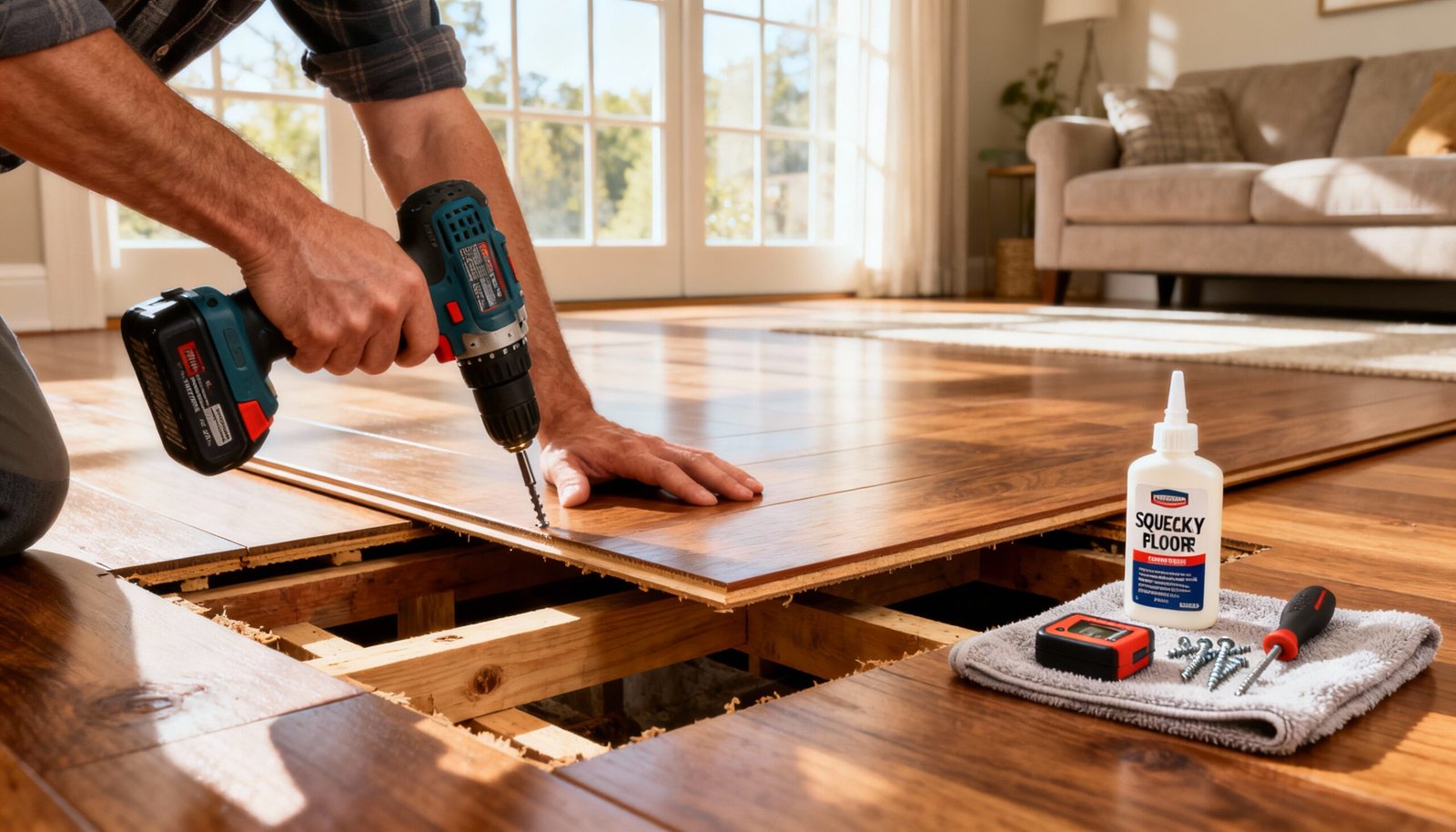
For stronger results, drive trim-head screws directly over joists after locating them with a stud finder. Drill tiny pilot holes using a #6 bit (about 1/16-inch diameter) to prevent wood splitting, then screw until the head sits 1/2-inch into the joist. Fill holes with color-matched wood putty or plugs, sanding lightly once dry. Each spot takes about 10 minutes and holds for years.
Squeeeeek No More repair kits shine through carpet—their breakaway screws pull subfloors tight then snap below the surface for invisible fixes. Test household lubricants like WD-40 sparingly in hidden spots first to avoid finish damage. If multiple squeaks persist after these attempts, deeper repairs become necessary. Everbilt squeaky floor kit at Home Depot delivers reliable results.
Permanent Ways to Fix Squeaky Floors from Above
When basement access proves impossible, learn how to fix squeaky floors permanently from the top down on hardwood surfaces. Joists run every 16 inches typically—use a reliable stud finder or tap for solid spots, marking lines with painter’s tape for accuracy.
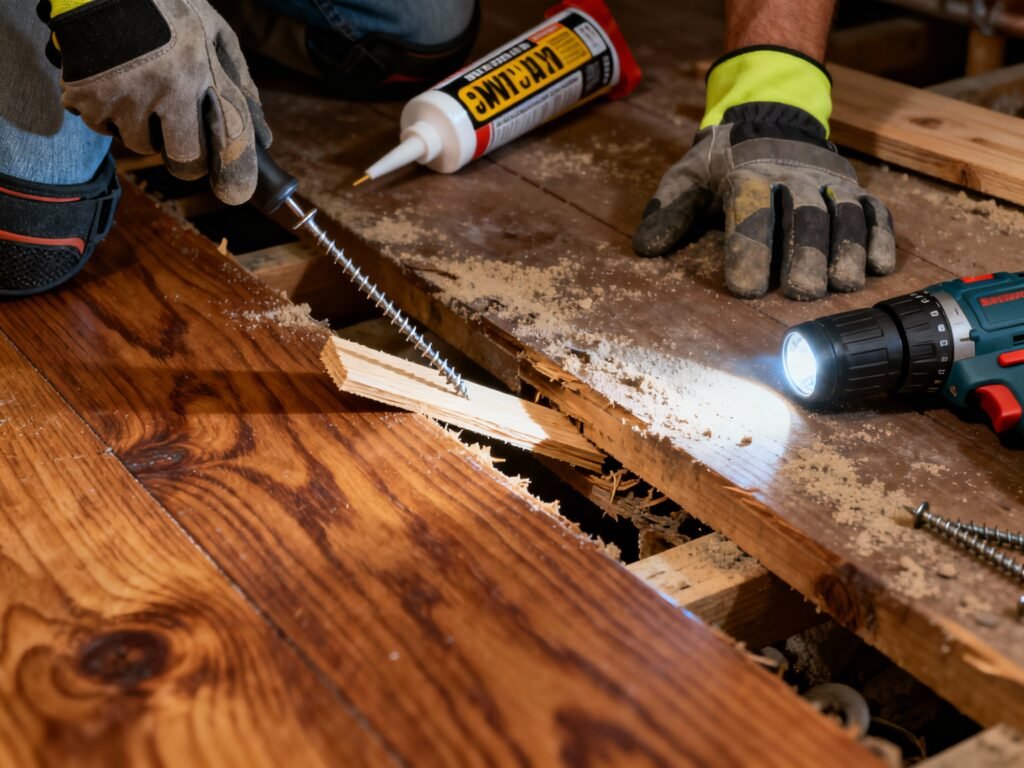
Drill pilot holes straight over joists or angle at 45 degrees through tongue-and-groove edges, spacing fasteners 8-12 inches apart. Select #8 or #9 trim-head wood screws long enough to penetrate subfloor plus 1/2-inch into joists without poking through ceilings below. Countersink heads slightly, then conceal with glued wood plugs or filler matched to your floor finish—test combinations on scraps first.
Inject construction adhesive into pried gaps where boards flex, clamping or weighting overnight for a rock-solid bond. Warped boards require careful removal with a circular saw set to plank depth, then sistering new matching pieces with adhesive and nails. A standard bedroom repair runs 1-3 hours costing $20-50 total. Protect surrounding areas with drop cloths and vacuum dust religiously. Engineered floors demand shallow bits to preserve thin veneers. Check our hardwood floor maintenance guide for complementary care tips—this internal link strengthens your site’s SEO structure.
Underfloor Methods to Fix Squeaky Floors for Good
Underfloor access delivers the most durable fixes for subfloor-to-joist separation. Locate joists below by following nail patterns, plumbing runs, or tapping for solid thuds versus hollow sounds. Run continuous beads of construction adhesive along joist tops where gaps exist, filling voids completely.
Drive 2.5-3 inch flooring screws every 8 inches through subfloor into joists, pre-drilling pilots in dry wood to avoid cracks. For larger separations, coat wood shims with adhesive and tap gently until snug—trim excess flush without bowing the floor above. Sister cracked joists by gluing and screwing matching lumber alongside over the full affected span.
Replace rotted subfloor patches with new 3/4-inch plywood, securing thoroughly. Post-repair, reinstall insulation and seal penetrations with foam or caulk against moisture intrusion. Kneepads prove essential in tight crawlspaces. This Old House demonstrates shimming perfectly for lasting results.
Essential Tools and Materials List
Stock these basics before attempting to fix squeaky floors: cordless drill with bits, stud finder, safety glasses, gloves, dust mask, and kneepads. Add wood filler, matching plugs, construction adhesive, and specialized kits for complete coverage.
Quality matters—GRK screws outperform generics by resisting pull-out over time. Franklin stud finders detect joists through multiple layers accurately. Powdered lubricants cost pennies per use yet silence minor issues instantly. Budget $50-100 total for most home repairs.
Keep extras for color matching and testing. Proper preparation halves your project time significantly.
Prevention Tips After You Fix Squeaky Floors
Avoid repeat problems by maintaining 35-55% indoor humidity year-round using humidifiers or dehumidifiers. Inspect high-traffic floors quarterly, tightening loose trim or transitions promptly.
During new installs, specify 3/4-inch plywood subfloors screwed—not nailed—into place. Pair laminate with dense cork underlayment instead of flimsy foam. Learn humidity control basics from This Old House experts.
Shift rugs seasonally to catch hidden wear. These habits extend all repairs dramatically.
When Professionals Should Fix Squeaky Floors
DIY handles 80% of localized squeaks safely, but call pros for rot, sagging beyond 1/2-inch deflection, persistent water stains, or multi-room issues. Upstairs floors without crawlspace access often require specialized equipment too.
Basic pro fixes cost $200-500; full joist work hits $1,000-3,500 including inspections. Demand written bids, references, and structural reports. Reddit handyman advice echoes these thresholds perfectly.
Experts manage asbestos, wiring hazards, and heavy lifting risks flawlessly.
Affiliate Disclosure: This post contains affiliate links. Purchases through them support the site at no extra cost to you.