

Table of Contents
How to Install Floating Shelves: Transform Your Space
Installing floating shelves adds modern storage without bulky brackets, perfect for kitchens, bathrooms, or living rooms. This comprehensive how to install floating shelves guide covers planning through finishing touches for secure, lasting results. Follow these proven steps so your shelves hold books, decor, dishes, or even kitchen appliances confidently.
Short paragraphs keep how to install floating shelves instructions clear for DIY beginners. Proper installation prevents sagging, wall damage, or crashes. Expect 1-2 hours per shelf depending on wall type and experience. Beginners often miss stud locations—address this first to avoid common failures.
Real example: A small apartment kitchen gained counter space by replacing cabinets with floating shelves using this how to install floating shelves method.
Why Choose Floating Shelves?
Floating shelves create sleek, open storage that maximizes space in any room. Heavy-duty brackets support 45-50 pounds per stud, up to 100-200 pounds total across multiple studs. Perfect for displaying plants, frames, spices, or small appliances without visible hardware showing.
Renters love them—remove cleanly without patch marks using proper anchors. Add LED strips underneath for ambient lighting that highlights your decor beautifully. Calculate loads carefully: lightweight decor maxes at 10-15 pounds per linear foot; heavier items demand reinforced brackets.
Room-specific benefits: Kitchens gain dish storage, living rooms display books, bathrooms organize towels. The how to install floating shelves process ensures stability for all these uses.
Essential Tools and Materials
Gather these essentials before your how to install floating shelves project begins:
- Stud finder with electrical detection (magnetic or electronic)
- Level or laser level for precision across long spans
- Drill/driver with wood, masonry, and pilot bits
- Heavy Duty Floating Shelf Brackets (50-100 lbs capacity) rated 50+ pounds per stud
- Heavy Duty Toggle Bolts for Drywall Anchors for non-stud locations (weight-rated)
- Pencil, painter’s tape, 25-foot measuring tape
- Shelf boards (1-2″ thick wood, MDF, or glass; pre-sanded)
- Safety gear: gloves, goggles, dust mask
Quality brackets prevent sagging over time. Reference the detailed Lowe’s floating shelves guide for bracket specifications. Rent laser levels for $20/day. Add wood glue and touch-up paint for professional finishes.
Pro tip: Buy 20% extra anchors—drywall surprises happen frequently. Total cost ranges $50-150.
Step-by-Step: How to Install Floating Shelves on Drywall
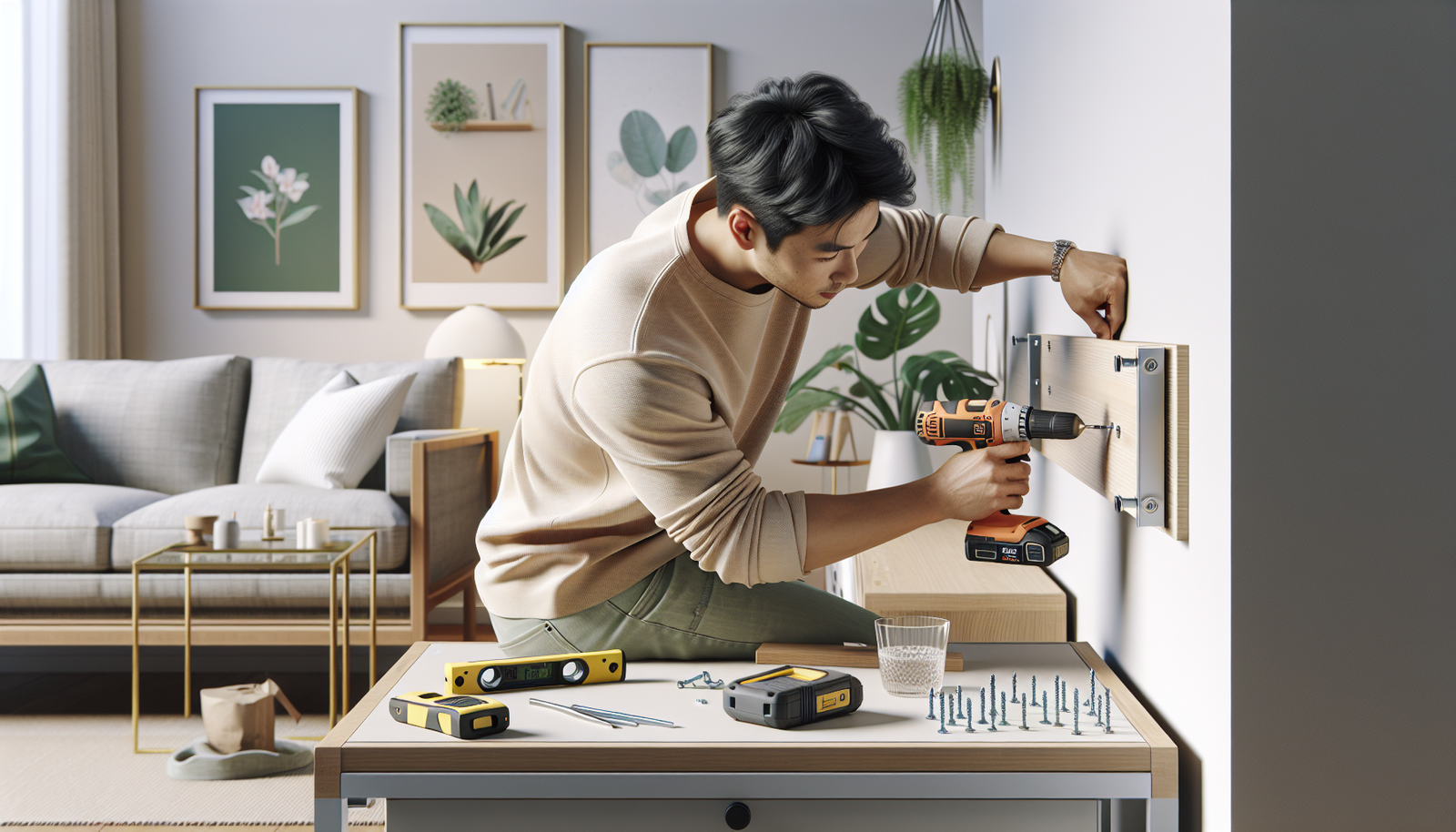
Step 1: Plan and Locate Studs
Measure height from floor—eye level (60-65″) suits displays, 18″ above counters works for kitchens. Use stud finder to mark centers every 16″ (standard spacing). Scan multiple passes to avoid wires or pipes near outlets.
Apply painter’s tape over marks for visibility. Minimum two studs per shelf; three for 100+ pound loads. Example: 36″ shelf hits studs at 0, 16, 32 inches. Test with thin nail—resistance confirms solid stud.
Step 2: Mark and Level Backplate
Position bracket at height, level to draw horizontal line across full shelf width. Mark screw holes precisely at stud centers. Double-check with laser level—bubble levels deceive on uneven walls.
Vertical spacing tip: 12-18 inches apart for easy access. Dry test-fit shelf board. Use Frogtape for multi-shelf alignment in your how to install floating shelves project.
Step 3: Secure the Bracket
Drill 1/8″ pilot holes into studs. Drive 3″ wood screws through bracket into studs, starting loose. Non-stud gaps need toggle anchors rated for shelf weight—tap gently, fold wings, screw tight.
Avoid over-tightening (cracks drywall); snug suffices. Re-level after each screw. Longer shelves require center supports during how to install floating shelves process.
Step 4: Mount the Shelf
Slide shelf onto bracket pins or cleat—dado cut must match bracket lip snugly. Tighten underside set screws clockwise with Allen wrench. Apply wood glue along cleat for vibration resistance (wipe excess); many brackets accommodate this.
Test stability: Push side-to-side, up-down. Load gradually over 24 hours starting at 10 pounds. Sand back edge 1/8″ if wall unevenness causes binding.
Step 5: Finishing Touches
Sand edges with 220-grit paper. Apply two coats polyurethane sealant or wall-matched paint. Dust before styling. Monthly inspections: Tighten screws, check cracks.
Bonus: Color-matched paintable caulk fills shelf-wall gaps seamlessly.
Common Mistakes to Avoid When Learning How to Install Floating Shelves
Skipping studs causes inevitable crashes—minimum two required; wall anchors alone fail under leverage forces. Uneven leveling creates crooked shelves; verify constantly with laser tools.
Overloading bows even thick wood—20 pounds per foot maximum for 1.5″ oak. Wrong drywall anchors fail; spring-toggle bolts handle 50+ pounds reliably. Rushing measurements wastes materials—measure twice always.
Popcorn textured walls hide unevenness; shim brackets accordingly. Skipping pilot holes strips studs. Real failure: 30-pound pots on single-stud shelf collapsed overnight.
Masonry or Concrete Walls
Tile, block, or concrete walls require masonry bits (3/16″ carbide-tipped). Drill 1/2″ deeper than sleeve anchors for maximum grip. Hammer-set anchors or Tapcon screws rate 75+ pounds each.
Follow drywall steps: Mark, level, drill (vacuum dust), insert anchors, secure bracket. Wet tile needs thorough drying first. See Home Depot’s complete masonry guide. Allow 30 extra minutes.
Advanced Tips for Professional Results
French cleats enable tool-free shelf removal: Cut matching 45° bevels on bracket and shelf back. Renters can supplement with heavy-duty adhesive strips (temporary solution only).
Multi-shelf installs: Stagger heights for visual interest, maintain consistent overhangs. Recessed LED lighting wires to switches or uses battery power Under Cabinet LED Strip Lights.
Maintenance routine: Quarterly vacuuming, even reloading prevents stress points. Upgrade to quartz/metal shelves for high-moisture bathrooms.
Styling and Room-Specific Applications
Kitchen shelves: Herbs, oils—seal wood against splashes thoroughly. Bathroom shelves: Towels, candles—choose moisture-resistant materials. Living room shelves: Books, vases—arrange in odd-numbered groups for balance.
Entryway shelves: Keys, mail—add integrated hooks below. Bedroom shelves: Nightstand overflow—symmetrical pairs work beautifully. Styling rule: 60% full capacity, vary heights, incorporate negative space.
Enhance Your Setup
Balance styling uses the rule of thirds for visual appeal. Explore more organization ideas in our kitchen storage solutions guide—perfect companion to your how to install floating shelves project.
Affiliate Disclosure :
This post contains affiliate links. If you purchase through these links, I may earn a commission at no extra cost to you.